I show how there's no limit to the size of fish you can catch with the Remote Control Fishing Pole.
-
7th veiw yea. great videos keep em coming
-
That's really cool Chase! Nice channel!
-
Great video Chase !! I can see that size doesn't matter.
-
Nice Chase! Thats also a great way to take a lure out to spooky fish. Great video.
-
Man, you guy's are the Greatest! That looked like alot of fun! Part one was cool too! I'm going to try getting a big one too!
-
i caught a 6lb cat with hot dogs u get a big chunk of it an inch thick and u throw it out there but i used a big bobber and a daiwa shock combo
-
if u get some left over brisket from a barb b q etc. and put it on ur hook (if its tender it will fall off easily) and don't cast it or it might fall off. if u have a dock set it right under there were the fish like to be and the stench of the meat will get u some pretty good sized cat fish cat fish i caught a 8plb today using some brisket.
-
your boat needs to be lower in the water.....put a few hundred grams in
-
so the boat only takes the line out and then u just wait until the velcrow comes off i get it thanks
-
I would just tie the actual hook and line to the boat and when the boat starts to bob, drive the boat with the fish on it back to the dock :D now thats pretty red neck :P
The 'pack' is getting mighty crowded and the fish have gone to ground, but Martin manages to winkle one out.
- Nice one Steve, Thanks! Martin
- you like chicken then :)
- After much thought i have decided .... Yes! I like chicken!
- No prob mate
- newl moon on friday lads im going down my local lake for 24 hrs wish me luck
- best of luck mate
Labels:
angler 4 ever,
angler for ever,
Crapie,
Crappie,
download free,
fish,
fishing,
for free,
line drawing clip art clipart,
photos fotos,
pictures images
Find here good and nice and large Crappie fish photos/fotos of well quality, download them on your computer for free and make the best of images your desktop wallpaper.
The Crapie Fishing photos/fotos/images/pictures/clipart/drawings for Wallpaper from Angler For Ever

Labels:
angler for ever,
fish,
fishing,
fly fishing,
free video online,
good fishing,
how to,
how to catch a fish,
rainbow trout,
trout,
video online
When targeting rainbow trout on free stone streams, the first step is to gain knowledge from a local fly shop regarding which flies to use. Learn about dry and wet fishing for rainbow trout with help from a fly fishing guide in this free video on fly fishing for rainbow trout.
Expert: Walt Geryk
Contact: neffguide.com
Bio: Walt Geryk is an Orvis-endorsed fly and spey fishing guide with over 30 years of experience.
Filmmaker: Christian Munoz-Donoso
Fly fishing guide in this free video on fly fishing for rainbow trout
Comments to this fishing movie:
-
-
this works i caught lots of trout
-
if you live in california, go to yosemite. then ask a ranger or something how to get to mammoth lakes. When you get there, you can rent cabins. go to lake goerge and in the way back, use this fly or a royal wulf I caught 8 15 inch rainbow and brook in like an hour.
-
cool. im probably not going to fly fish, cause my grandpa usually doesnt, but ill probably use mabe a bass rod with some corn on it. well, thats what my grandpa said.
Labels:
angler for ever,
articles,
fisher. angler. fisherman,
fishing,
good fishing,
how to,
how to catch a fish,
how to fish catch get,
how to fish catch get hook net,
tips techniques,
tips. techniques


Fishing, like many activities, is a popular competitive sport as well as an enjoyable hobby. If you’re interested in exploring more of this popular and fun activity, then you can start with a few
basic fishing tips.
Fishing licenses are required in all jurisdictions. Buying one is the most basic fishing tip. There is usually a fishing limit placed on the license, but not always. Knowing what the limit is an important fishing tip. Following this fishing tip will save you a lot of time and grief. Before you begin buying equipment and making plans, you should procure a fishing licenses. Another fishing tip is where to find the license. You can typically find those at sporting goods stores, gas stations, and sporting goods departments at major stores, like Wal-Mart. Be aware of the rules and laws in your area, because if you over-fish, or fish without a license, you could be subject to major fines.
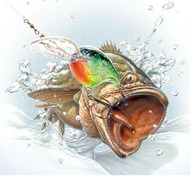
Once you have a license and you know what sort of fish you are fishing for, move on to the next fishing tip. You need to get your equipment—a fishing rod and tackle. Another fishing tip is to take the time to study your bait. Most people consider worms a good bait for any type of fish, but you might be surprised by the sheer amount of bait available. There’s live bait, bait made of cheese, bait made of fish eggs, rubber bait that looks like worms, bait designed to look like flies, bait that is very bright and flashy, and even bait that requires a floater. Researching bait is an
important fishing tip.
Another fishing tip is to be careful about your location. Some areas have an embarrassment of riches when it comes to great places to fish. In other areas, your choices might be more limited. A fishing tip is to let your location dictated by the type of fish you wish to catch and where you can find that fish. But other elements might be taken into consideration when consideration this fishing tip. For example, some spots are more popular than others. If you pick a very popular location, you might find it’s easier to catch your neighbor than it is to catch a fish.

-
Community impact: For communities like fishing villages, fisheries provide not only a source of food and work but also a community and cultural identity.[16]
-
Semantic impact: The expression "fishing expedition" (usually used to describe a line of questioning), describes a case in which the questioner implies that he knows more than he actually does in order to trick the target into divulging more information than he wishes to reveal. Other examples of fishing terms that carry a negative connotation are: "fishing for compliments", "to be fooled hook, line and sinker" (to be fooled beyond merely "taking the bait"), and the internet scam of Phishing in which a third party will duplicate a website where the user would put sensitive information (such as bank codes).
-
Religious Impact: Fishing has had an effect on all major religions, including Islam,[17] Christianity,[18][19] Buddhism, Jainism, Zoroastrianism, Wicca, Hinduism, Latter Day Saints and the various new age[20] religions. According to the Roman Catholic faith the first Pope was a fisherman, the apostle Peter,[21] and a number of the miracles reported in the Bible involve it. Additionally, the Pope's traditional costume includes a fish-shaped hat which some say is a representation of the Philistine god Dagon.
From Wikipedia
 Fisheries management draws on fisheries science in order to find ways to protect fishery resources so sustainable exploitation is possible. Modern fisheries management is often referred to as a governmental system of (hopefully appropriate) management rules based on defined objectives and a mix of management means to implement the rules, which are put in place by a system of monitoring control and surveillance.
Fisheries science is the academic discipline of managing and understanding fisheries. It is a multidisciplinary science, which draws on the disciplines of oceanography, marine biology, marine conservation, ecology, population dynamics, economics and management in an attempt to provide an integrated picture of fisheries. In some cases new disciplines have emerged, such as bioeconomics.
From Wikipedia

Angling.
Recreational and
sport fishing describe fishing for pleasure or competition. Recreational fishing has conventions, rules, licensing restrictions and laws that limit the way in which fish may be caught; typically, these prohibit the use of nets and the catching of fish with hooks not in the mouth. The most common form of recreational
fishing is done with a rod, reel, line, hooks and any one of a wide range of baits or artificial lures such as spinners or 'dry flies'. The practice of catching or attempting to catch fish with a hook is generally known as angling. In angling, it is sometimes expected or required that fish be returned to the water (catch and release). Recreational or sport fishermen may log their catches or participate in fishing competitions.
Big-game fishing describes fishing from boats to catch large open-water species such as tuna, sharks and marlin. Sport fishing (sometimes game fishing) describes recreational fishing where the primary reward is the challenge of finding and catching the fish rather than the culinary or financial value of the fish's flesh. Fish sought after include marlin, tuna, tarpon, sailfish, shark and mackerel although the list is endless.
From Wikipedia
 Traditional fishing is a term used to describe small scale commercial or subsistence fishing practices, using traditional techniques such as rod and tackle, arrows and harpoons, throw nets and drag nets, etc.
From Wikipedia
 Fishing
is the activity of catching fish. Fish are normally caught in the wild. Techniques for catching fish include hand gathering, spearing, netting, angling and trapping.
The term fishing may be applied to catching other aquatic animals such as shellfish, cephalopods, crustaceans, and echinoderms. The term is not usually applied to catching aquatic mammals, such as whales, where the term whaling is more appropriate, or to farmed fish. In addition to providing food,
modern fishing is also a recreational sport.
According to FAO statistics, the total number of fishermen and fish farmers is estimated to be 38 million. Fisheries provide direct and indirect employment to an estimated 200 million people. In 2005, the worldwide per capita consumption of fish captured from wild fisheries was 14.4 kilograms, with an additional 7.4 kilograms harvested from fish farms.[1]
From Wikipedia

Fishing down the foodweb
See also: Environmental effects of fishing and Overfishing
Issues involving fishing include environmental effects of fishing and fish farms, overfishing and by-catch, marine pollution and mercury levels.
These conservation issues are part of marine conservation, and are addressed in fisheries science programs. There is a growing gap between how many fish are available to be caught and humanity’s desire to catch them, a problem that gets worse as the world population grows.
Similar to other environmental issues, there can be conflict between the fishermen who depend on fishing for their livelihoods and fishery scientists who realise that if future fish populations are to be sustainable then some fisheries must limit fishing or cease operations.
From Wikipedia

Crab boat from the North Frisian Islands working in the North Sea
A fishing vessel is a boat or ship used to catch fish in the sea, or on a lake or river. Many different kinds of vessels are used in commercial, artisanal and recreational fishing.
According to the FAO, there are currently (2004) four million commercial fishing vessels.[14] About 1.3 million of these are decked vessels with enclosed areas. Nearly all of these decked vessels are mechanised, and 40,000 of them are over 100 tons. At the other extreme, two-thirds (1.8 million) of the undecked boats are traditional craft of various types, powered only by sail and oars.[14] These boats are used by artisan fishers.

It is difficult to estimate how many recreational fishing boats there are, although the number is high. The term is fluid, since most recreational boats are also used for fishing from time to time. Unlike most commercial fishing vessels, recreational fishing boats are often not dedicated just to fishing. Just about anything that will stay afloat can be called a recreational fishing boat, so long as a fisher periodically climbs aboard with the intent to catch a fish. Fish are caught for recreational purposes from boats which range from dugout canoes, kayaks, rafts, pontoon boats and small dingies to runabouts, cabin cruisers and cruising yachts to large, hi-tech and luxurious big game rigs.[15] Larger boats, purpose-built with recreational fishing in mind, usually have large, open cockpits at the stern, designed for convenient fishing.
From Wikipedia

Modern Spanish tuna purse seiner in the Seychelles Islands
The fishing industry includes any industry or activity concerned with taking, culturing, processing, preserving, storing, transporting, marketing or selling fish or fish products.
It is defined by the FAO as including recreational, subsistence and commercial fishing, and the harvesting, processing, and marketing sectors.[10] The commercial activity is aimed at the delivery of fish and other seafood products for human consumption or as input factors in other industrial processes.
There are three principal industry sectors:[11]
-
The commercial sector comprises enterprises and individuals associated with wild-catch or aquaculture resources and the various transformations of those resources into products for sale. It is also referred to as the "seafood industry", although non-food items such as pearls are included among its products.
Commercial fishing
Commercial fishing is the capture of fish for commercial purposes. Those who practice it must often pursue fish far into the ocean under adverse conditions. Commercial fishermen harvest almost all aquatic species, from tuna, cod and salmon to shrimp, krill, lobster, clams, squid and crab, in various fisheries for these species. Commercial fishing methods have become very efficient using large nets and sea-going processing factories. Individual fishing quotas and international treaties seek to control the species and quantities caught.
A commercial fishing enterprise may vary from one man with a small boat with hand-casting nets or a few pot traps, to a huge fleet of trawlers processing tons of fish every day.
Commercial fishing gear includes weights, nets (e.g. purse seine), seine nets (e.g. beach seine), trawls (e.g. bottom trawl), dredges, hooks and line (e.g. long line and handline), lift nets, gillnets, entangling nets and traps.
According to the Food and Agriculture Organization of the United Nations, total world capture fisheries production in 2000 was 86 million tons (FAO 2002). The top producing countries were, in order, the People's Republic of China (excluding Hong Kong and Taiwan), Peru, Japan, the United States, Chile, Indonesia, Russia, India, Thailand, Norway and Iceland. Those countries accounted for more than half of the world's production; China alone accounted for a third of the world's production. Of that production, over 90% was marine and less than 10% was inland.
A small number of species support the majority of the world’s fisheries. Some of these species are herring, cod, anchovy, tuna, flounder, mullet, squid, shrimp, salmon, crab, lobster, oyster and scallops. All except these last four provided a worldwide catch of well over a million tonnes in 1999, with herring and sardines together providing a catch of over 22 million metric tons in 1999. Many other species as well are fished in smaller numbers.
Fish farms

Intensive koi aquaculture facility in Israel
Fish farming is the principal form of aquaculture, while other methods may fall under mariculture. It involves raising fish commercially in tanks or enclosures, usually for food. A facility that releases juvenile fish into the wild for recreational fishing or to supplement a species' natural numbers is generally referred to as a fish hatchery. Fish species raised by fish farms include Atlantic salmon, carp, tilapia, catfish, trout and others.
Increased demands on wild fisheries by commercial fishing has caused widespread overfishing. Fish farming offers an alternative solution to the increasing market demand for fish and fish protein.
Fish products

Gyula Derkovits, still-life with fish (1928)
Fish and fish products are consumed as food all over the world. With other seafoods, it provides the world's prime source of high-quality protein: 14–16 percent of the animal protein consumed worldwide. Over one billion people rely on fish as their primary source of animal protein.[12][13]
Fish and other aquatic organisms are also processed into various food and non-food products, such as sharkskin leather, pigments made from the inky secretions of cuttlefish, isinglass used for the clarification of wine and beer, fish emulsion used as a fertilizer, fish glue, fish oil and fish meal.
Fish are also collected live for research or the aquarium trade.
Fish marketing
From Wikipedia

An angler on the Kennet and Avon Canal, England, with his tackle.
Fishing tackle is a general term that refers to the equipment used by fishermen when fishing.
Almost any equipment or gear used for fishing can be called fishing tackle. Some examples are hooks, lines, sinkers, floats, rods, reels, baits, lures, spears, nets, gaffs, traps, waders and tackle boxes.
Tackle that is attached to the end of a fishing line is called terminal tackle. This includes hooks, sinkers, floats, leaders, swivels, split rings and wire, snaps, beads, spoons, blades, spinners and clevises to attach spinner blades to fishing lures.
Fishing tackle can be contrasted with fishing techniques. Fishing tackle refers to the physical equipment that is used when fishing, whereas fishing techniques refers to the ways the tackle is used when fishing.
From Wikipedia

Fishermen with traditional fish traps, Hà Tây, Vietnam
There are many fishing techniques or methods for catching fish. The term can also be applied to methods for catching other aquatic animals such as molluscs (shellfish, squid, octopus) and edible marine invertebrates.
Fishing techniques include hand gathering, spearfishing, netting, angling and trapping. Recreational, commercial and artisanal fishers use different techniques, and also, sometimes, the same techniques. Recreational fishers fish for pleasure or sport, while commercial fishers fish for profit. Artisanal fishers use traditional, low-tech methods, for survival in third-world countries, and as a cultural heritage in other countries. Mostly, recreational fishers use angling methods and commercial fishers use netting methods.
There is an intricate link between various fishing techniques and knowledge about the fish and their behaviour including migration, foraging and habitat. The effective use of fishing techniques often depends on this additional knowledge.[9]
From Wikipedia

Fishing,tacuinum sanitatis casanatensis (XIV century)

Stone Age fish hook made from bone.
Fishing is an ancient practice that dates back at least to the Paleolithic period which began about 40,000 years ago.[2] Isotopic analysis of the skeletal remains of Tianyuan man, a 40,000 year old modern human from eastern Asia, has shown that he regularly consumed freshwater fish.[3][4] Archaeology features such as shell middens,[5] discarded fish bones and cave paintings show that sea foods were important for survival and consumed in significant quantities. During this period, most people lived a hunter-gatherer lifestyle and were, of necessity, constantly on the move. However, where there are early examples of permanent settlements (though not necessarily permanently occupied) such as those at Lepenski Vir, they are almost always associated with fishing as a major source of food.

Egyptians bringing in fish, and splitting for salting.
The ancient river Nile was full of fish; fresh and dried fish were a staple food for much of the population.[6] The Egyptians had implements and methods for fishing and these are illustrated in tomb scenes, drawings, and papyrus documents. Some representations hint at fishing being pursued as a pastime. In India, the Pandyas, a classical Dravidian Tamil kingdom, were known for the pearl fishery as early as the 1st century BC. Their seaport Tuticorin was known for deep sea pearl fishing. The paravas, a Tamil caste centred in Tuticorin, developed a rich community because of their pearl trade, navigation knowledge and fisheries. Fishing scenes are rarely represented in ancient Greek culture, a reflection of the low social status of fishing. However, Oppian of Corycus, a Greek author wrote a major treatise on sea fishing, the Halieulica or Halieutika, composed between 177 and 180. This is the earliest such work to have survived to the modern day. Pictorial evidence of Roman fishing comes from mosaics.[7] The Greco-Roman sea god Neptune is depicted as wielding a fishing trident. The Moche people of ancient Peru depicted fisherman in their ceramics.[8]
One of the world’s longest trading histories is the trade of dry cod from the Lofoten area of Norway to the southern parts of Europe, Italy, Spain and Portugal. The trade in cod started during the Viking period or before, has been going on for more than 1000 years and is still important.
From Wikipedia


